The Challenge
When tasked with creating the Santa Fe Academic Plan, I faced several unique challenges: this was a new application that needed to fit into the existing college ecosystem, using established user flows and utilities. At the same time, I was started to build a design system using Invision DSM that would support this and future projects.
- New integration: A fresh product within established user flows.
- Technical constraints: Needed to leverage existing utilities and platforms.
- Initial design system: First steps in defining the SF ITS Design System.
- Usability testing: Recruiting and testing with students to ensure real-world functionality.
Research & Discovery
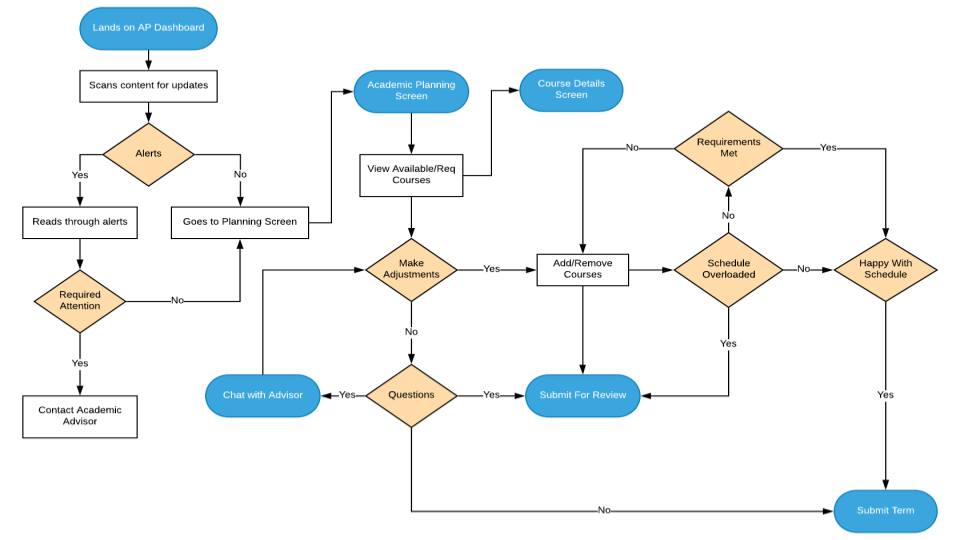
The ensure the Academic Plan met student and staff needs, I conducted extensive research that helped inform the designs and validate assumptions. This phase involved gathering insights from various stakeholders, understanding current academic planning workflows and mapping out user journeys.
- 30+ hours of user interviews with pilots, ground crew, and administrators
- Analysis of existing workflows and pain points
- Competitive analysis of industry solutions
- Review of aviation safety regulations and compliance requirements
 Load the Santa Fe ITS Persona Hub
The Solution
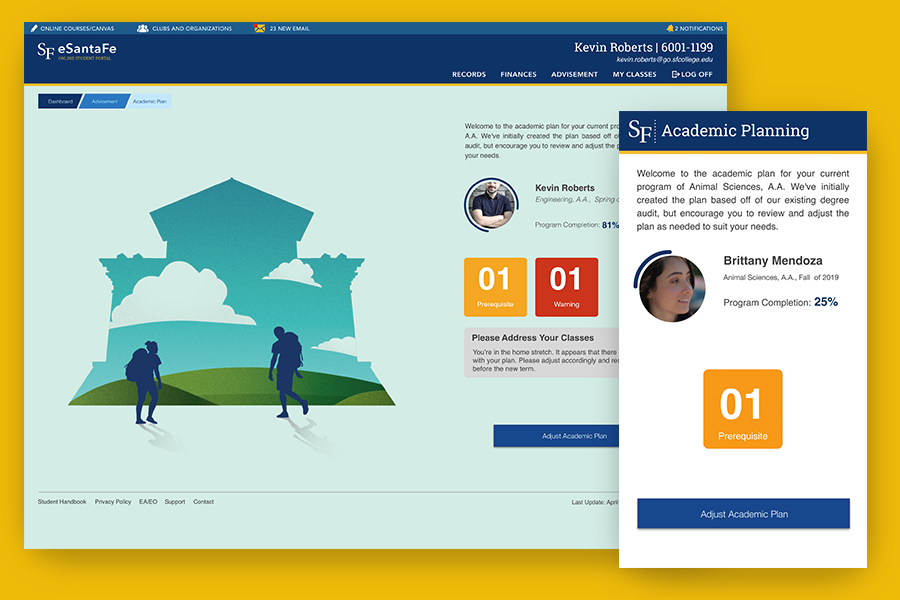
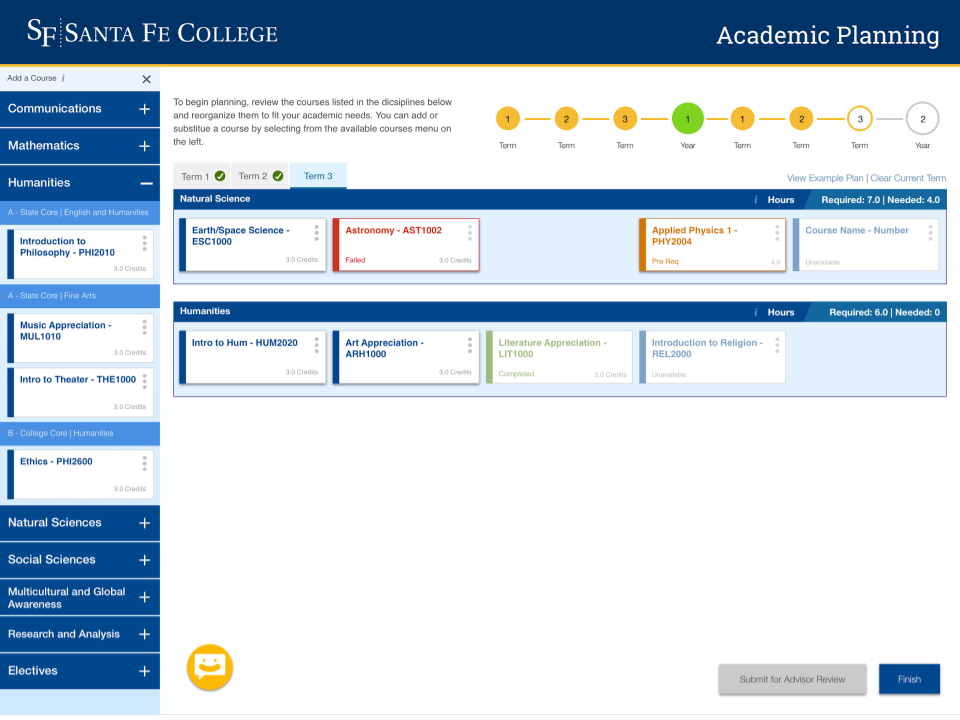
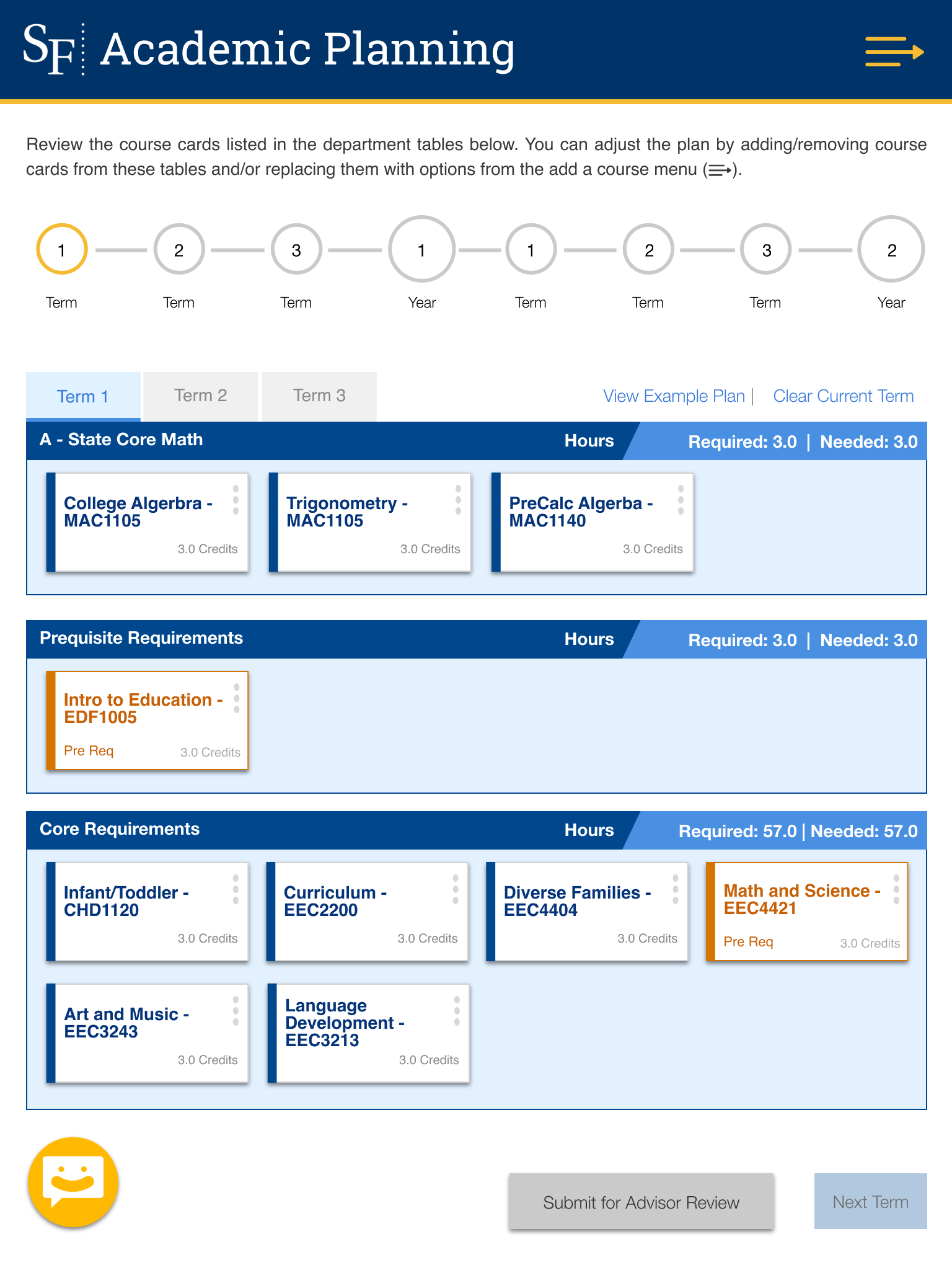
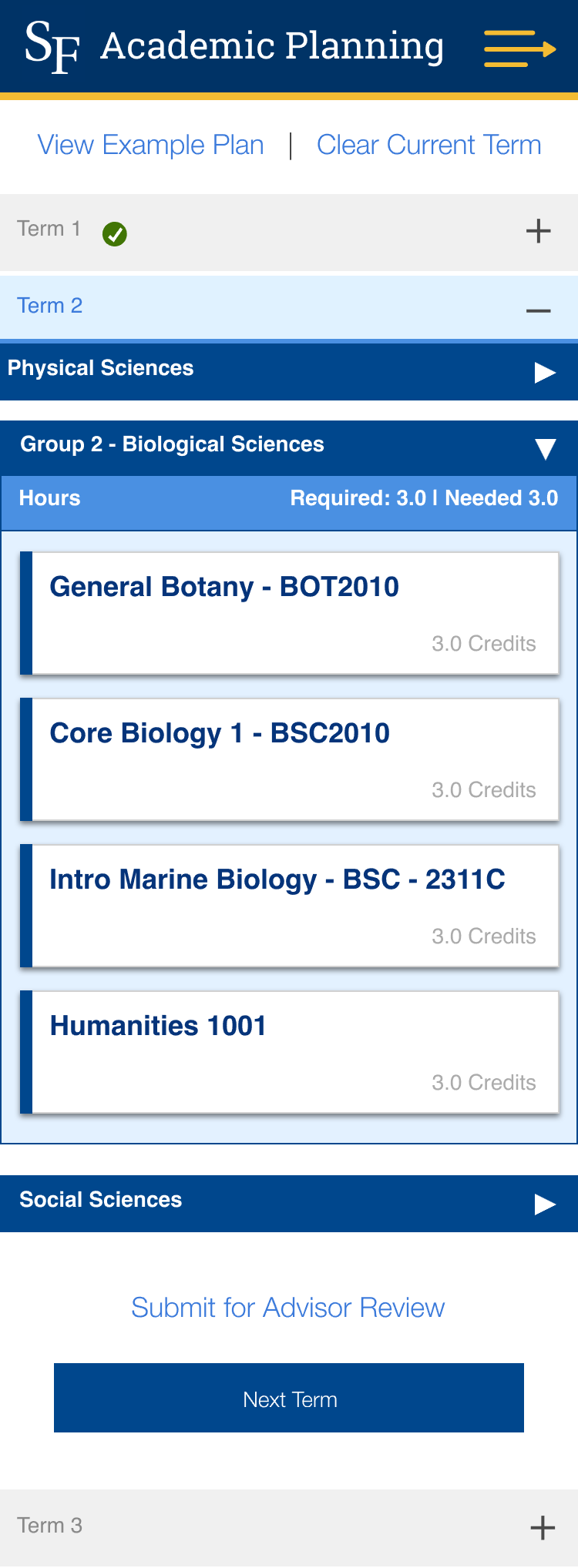
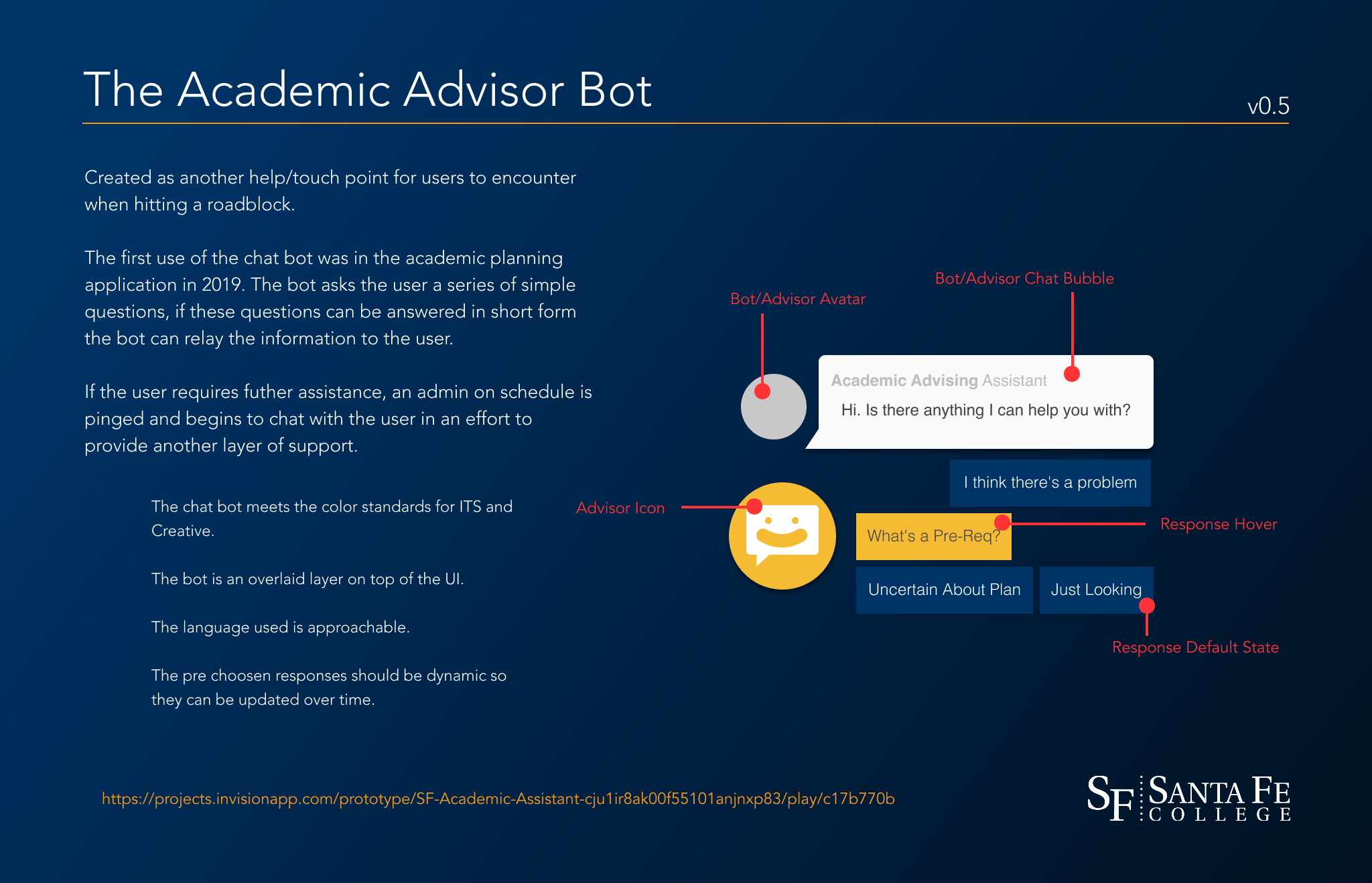
Building on research insights, I developed a prototype for the Academic Planning application and tested iteratively, making improvements based on student feedback. Collaborating closing with Front-End Engineering, I ensured each component was functional, accessible and cohesive within the evolving SF ITS design system. The academic plan launched at the end of 2019. Key features included:
- Streamlined workflow design reducing steps by 60%
- Intuitive interface making it easier for shoppers to checkout
- Real-time item suggestions based on purchasing habits
- Mobile-first approach for field operations
Key Results
Increased student career engagement
Reduced time to complete planning
decrease in academic support tickets
Lessons Learned
This project provided invaluable lessons in balancing users needs with system limitations, and it underscored the importance of iterative testing and design systems for long term scalability.
- The importance of extensive user research in complex domains
- Balance between simplification and maintaining necessary complexity
- Value of iterative testing with actual end-users
- Critical role of stakeholder communication throughout the process